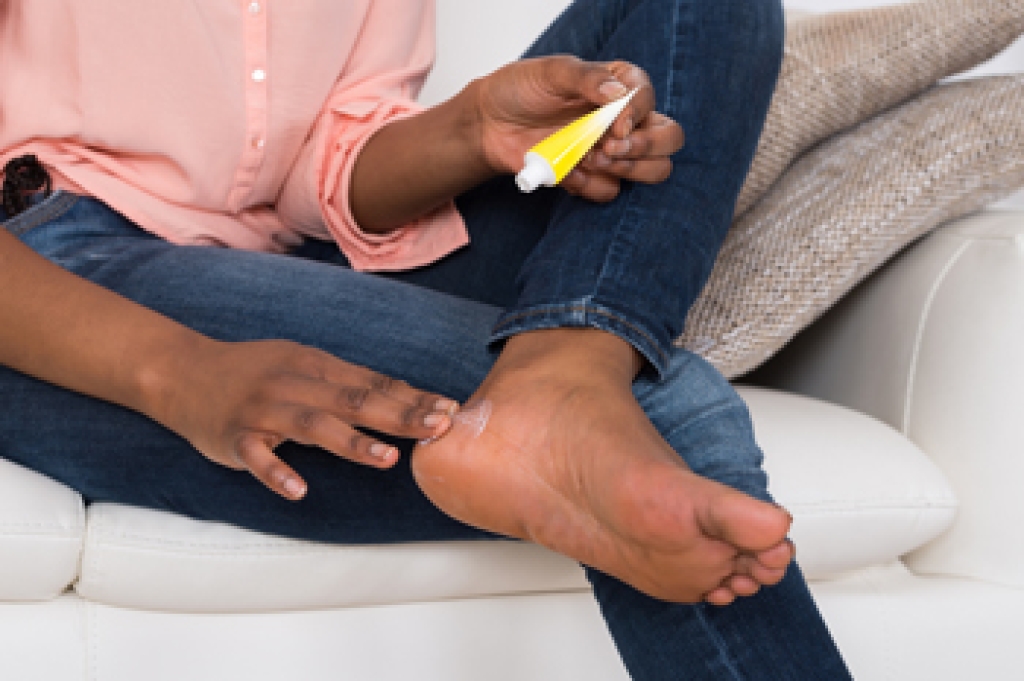
Cracked heels develop when dry, thickened skin around the heel splits under pressure. The cracks, also called fissures, can range from shallow lines to deep openings. Standing for long periods of time increases pressure on the heel, when skin loses moisture. Shoes that fit poorly can create friction and make the problem worse. Wearing open-back sandals can allow the heel to spread outward, placing extra strain on dry skin. Aging makes skin less flexible. Because the soles lack oil glands, they have less natural protection against dryness. These factors can leave heels rough, uncomfortable, and more likely to crack.
At first, cracked heels may appear as dry patches or thick, hard skin along the heel's edge. Deeper cracks can cause pain while walking or standing. Some patients notice bleeding when the skin splits. Redness, swelling, or drainage can suggest an infection requiring attention. Certain health problems, including diabetes, can increase concern about breaks in the skin. Athlete's foot and psoriasis can contribute to cracking. Hot water and harsh soaps can strip moisture from the skin, adding to the problem. Identifying the cause matters because cracked heels can return when the underlying pressure or skin condition remains.
A podiatrist can examine the heels, assess the depth of the cracks, and look for signs of infection. Treatment can include reducing thick callused skin and applying protective dressings. A podiatrist can recommend suitable moisturizing products to help restore the skin's protective barrier. They can also evaluate shoe fit and suggest cushioned shoes that support the heel. When another skin condition is responsible, treatment can address that cause as well. Follow-up care can help monitor healing and reduce the chance of further cracking. If you have cracked heels, it is suggested that you schedule an appointment with a podiatrist for effective treatment solutions, which may include prescribed medication.
If the skin on your feet starts to crack, you may want to see a podiatrist to find treatment. If you have any concerns, contact Alice Kim, DPM from 101 Foot and Ankle. Our doctor can provide the care you need to keep you pain-free and on your feet.
Cracked Heels
It is important to moisturize your cracked heels in order to prevent pain, bleeding, and infection. The reason cracked heels form is because the skin on the foot is too dry to support the immense pressure placed on them. When the foot expands, the dry skin on the foot begins to split.
Ways to Help Heal Them
- Invest in a good foot cream
- Try Using Petroleum Jelly
- Ease up on Soaps
- Drink Plenty of Water
Ways to Prevent Cracked Heels
- Moisturize After Showering
- Skip a Shower
- Keep Shower Water Lukewarm
- Don’t Scrub Your Feet
If you are unsure how to proceed in treating cracked heels, seek guidance from a podiatrist. Your doctor will help you with any questions or information you may need.
If you have any questions, please feel free to contact our office located in Camarillo, CA . We offer the newest diagnostic and treatment technologies for all your foot care needs.
